How to Select the Right Plants for a Butterfly Friendly Garden
Recent research indicates that our treasured domestic gardens in Britain cover an area bigger than all of the country’s nature reserves combined. Our own gardens may not be large but they create important wildlife corridors for wildlife and much needed habitats. With the loss of many natural grasslands, meadows and woodlands, our gardens are becoming vital in the battle to preserve our biodiversity.
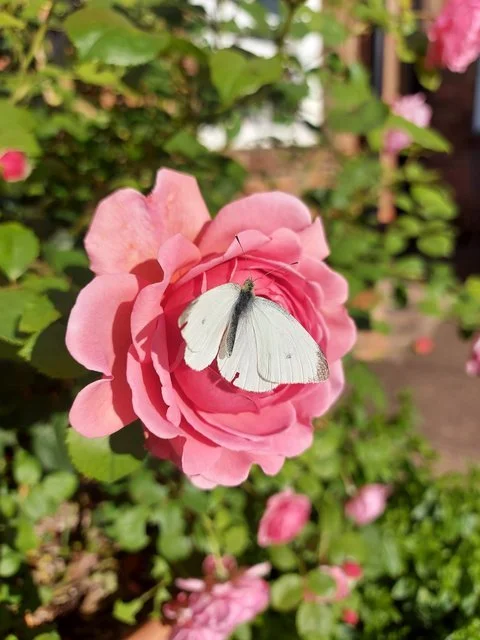
Not all of our butterflies live solely in the UK, some migrate from Europe each year and will be attracted into our gardens if we can offer them a nectar rich food supply and food sources for their younger selves. Butterflies are generally 'on the w ing from March to October', so by ensuring we have a succession of flowering plants in bloom throughout the seasons will provide them with a vital food source and we can enjoy the display too.
When setting about a planting bed from scratch or adding to an existing scheme, it's important to ensure there is sufficient of each plant variety to support the butterflies and attract them to the garden - so planting in groups of 3, 5 or 7 will help. Butterflies will prefer a sheltered spot too so planting by a boundary wall or fence would be beneficial.
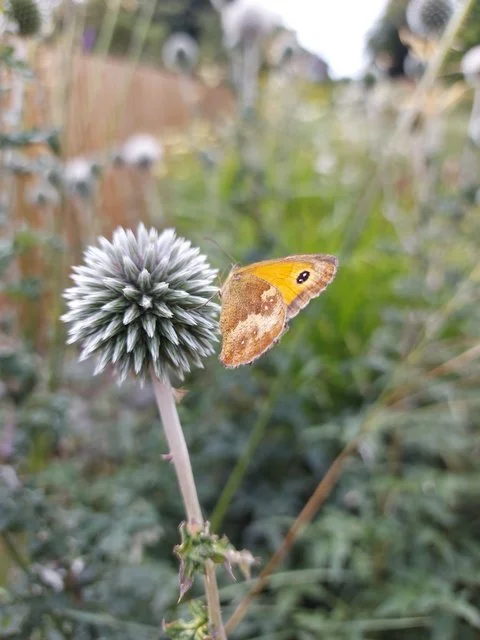
Whether planning a new butterfly friendly patch or adding plants into an existing border, there are a whole host of plants we can select which will attract butterflies to our gardens.
Spring: The early months of the year are really important. Nectar rich spring flowering plants to try are - Aubretia (Aubretia deltoides), Honesty (Lunaria annua), Primrose (Primula vulgaris), Sweet Rocket (Hesperis matronalis), Sweet Violet (Viola odorata), Wallflower (Cheiranthus cherii), Yellow Alyssum (Alyssum saxatile)
Summer: In the wamer months, there are classic butterfly friendly plants to select to draw in clouds of butterflies to our gardens, such as Buddleia (Buddleia davidii), Catmint (Mentha mussinii), Cornflow er (Centaurea cyanus), Heliotrope (Heliotropium x hybridum), Knapw eed (Centaurea nigra), Lavender (Lavendula spicata), Marjoram (Origanum officinalis), Thyme (Thymus drucei), Tobacco Plant (Nicotiana), Valerian (Centranthus ruber)
Autumn: As the weather cools it's imporatant to keep a nectar rich supply available for the later fliers. Try Ice Plant (Sedum spectabile), Golden Rod (Solidago virgaurea), Helenium (Helenium autumnale), Hyssop (Hyssopus officinalis), Sw eet scabious (Scabiosa)
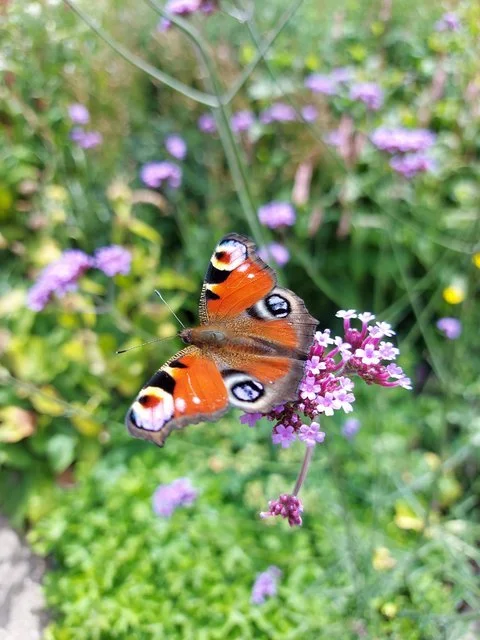
A 'wild' spot in the garden can also be beneficial to butterflies. Nettles are the food plant for Small Tortoiseshell, Comma and Red Admiral. Just be aware that Nettles can be invasive so keep them under control. Brambles are good for Wall Brown plus many other invertebrates and birds too. Thistles are the food plant of Painted Lady and Brimstone, plus a nectar source for many other species. Long grass will support Meadow Brow n, Hedge Brown, Wall Brown, Marbled White, Large Skipper and Small Skipper, so if you are able to leave an area of long lawn it would be very beneficial.
I hope I have inspired you to attract butterflies into your garden. If you would like help with planting in your garden please get in touch here.