How to Select the Right Trees and Bel’s Favourites
As we approach the autumn months, there is still some warmth from the summer in the air and the soil is moist without being waterlogged. It’s the perfect conditions for planting all manner of plants whether they are container grown, loose bulbs or bare-root.
We’ll soon see trees being offered by nurseries garden centres. Planted now whilst the weather is favourable, they have the opportunity to establish and settle in before the demanding spring and summer season is upon us. There are several forms to look out for:
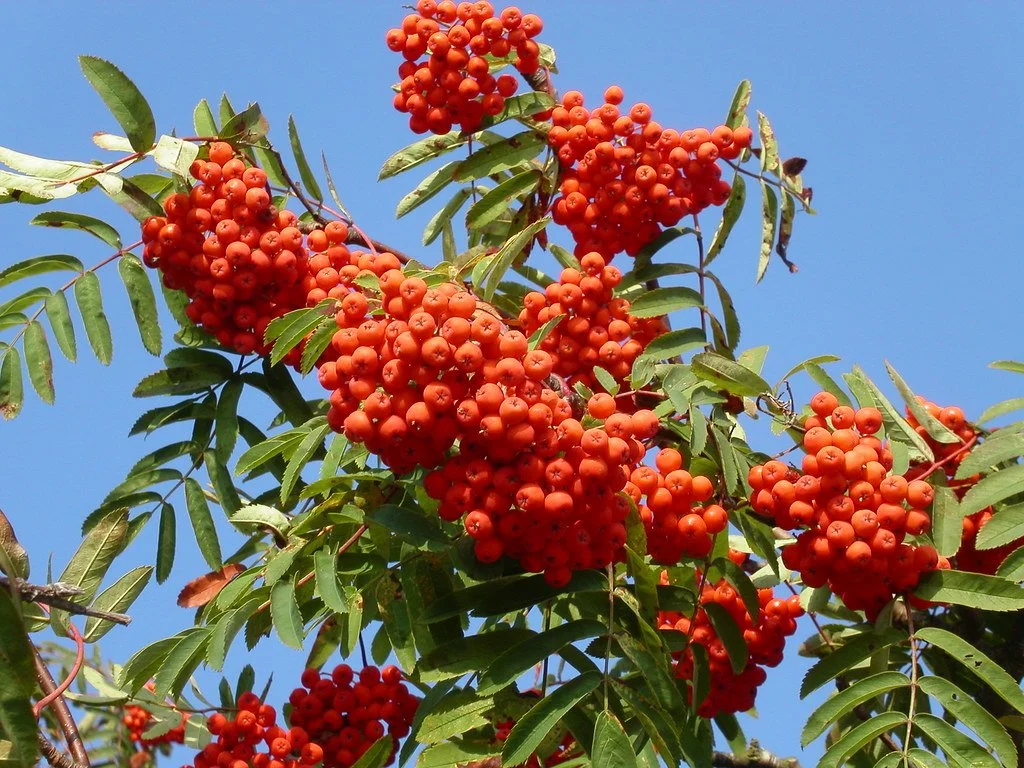
Mountain Ash / Rowan
Bare-root plants - The term bare-root applies to plants which have been grown in a field for several years before being lifted and the soil removed from their roots. Although this sounds like a brutal treatment, the plants cope perfectly well and you’ll also find that bare-root plants are the cheaper option.
Container grown - Container grown plants are a more widely available option. They tend to be more expensive but establish well and can be a safer option if you’re not green fingered. Look for well rooted plants which look health and have no signs of dead branches or diseases on the stems.
Root-balled plants are also an option. These are grown in a field like the bare-root plants but when they are lifted the soil around the roots is kept intact and then wrapped with hessian to protect it. Root-balling is generally carried out for evergreens rather than deciduous trees. Ensure that the root-balls have not been allowed to dry out at the nursery or prior to planting, otherwise they will struggle to establish and may drop their leaves in spring. So beware!
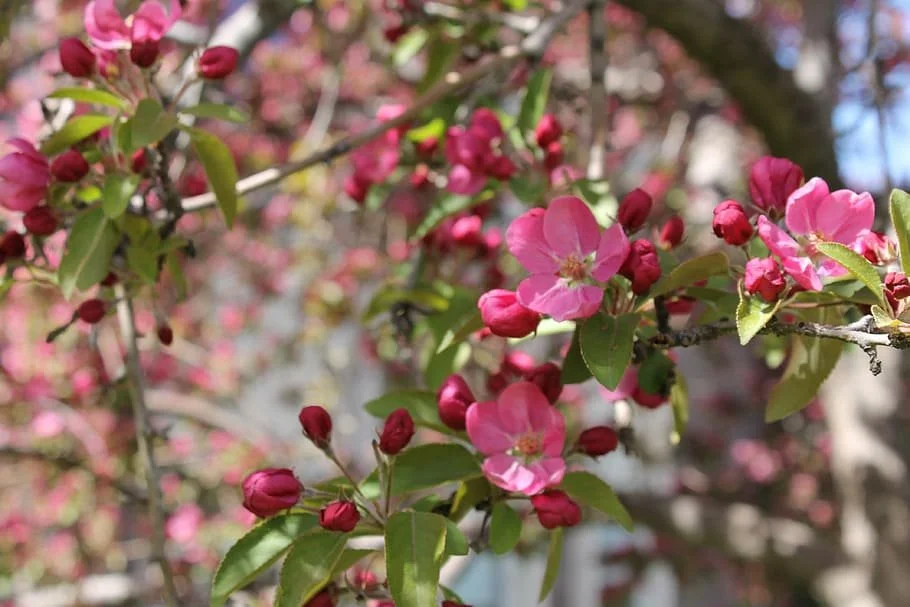
Cabapple / Malus
With the options considered, what varieties are there available to fit small to medium sized gardens? Well there are lots to choose from, but I favour the following as they provide several seasons of interest.
Hawthorn (aka Crataegus) - there are some lovely ornamental forms which are hardy, will tolerate less than ideal soil conditions and grow to make dense trees of around 12-18ft. Crateagus ‘Paul’s Scarlet’ has rich double pink blooms in early spring and golden foliage in autumn. Crataegus × lavalleei 'Carrierei' has large glossy leaves from March right through to December, white blooms in spring followed by masses of cherry sized orange berries in the autumn – a great tree for small gardens.
Crabapples (aka Malus) - The popular Malus ‘James Downie’ is grown for its large golden-red fruit which make good Crabapple jelly. Or try Malus ‘Golden Hornet’ which has masses of golden fruit in autumn and grows in a columnar habit.
Ornamental Cherries (aka Prunus) – There are so many varieties available but I favour the simple forms like Prunus ‘Okame’ which flowers in Feb-March and the large ‘Tai Haku’ which is smothered in very large white blooms in spring. Both have fiery autumnal foliage colour.
Japanese Acers - There are so many varieties of these maples offered by nurseries, each with a different leaf shape, habit or colour. Ideal for growing in pots these prefer slightly acidic compost when planting. Heights vary but most are slow growing and make good trees for small – medium gardens. These are best bought container grown.
Adding height to your garden with trees, can offer so much – screening from over looking neighbours, colourful foliage, flowers and fruit and an excellent habitat for wildlife. Plus trees can add structure to a garden and height, especially of level plots. It is surprising how the vertical structure of a tree can change the look of a garden!
If you’re interested in transforming your garden and would like Bel’s help, get in touch here or Tel. 07506 750250